Soil Nail Walls Design: Stage Conditions & SnailPlus Software
Updated: May 4
A. INTRODUCTION
In the field of geotechnical engineering, innovation paves the way for safer, more efficient, and meticulously designed structures. The advancement of sophisticated software tools has revolutionized the approach to geotechnical projects, transcending traditional boundaries and ushering in a new era of precision and versatility.
One such groundbreaking tool is SnailPlus – a comprehensive slope stability analysis and soil nail wall design software developed to seamlessly integrate every aspect of the design process. As engineers and designers strive to create structures that stand the test of time and nature’s challenges, the significance of considering varying stage conditions becomes paramount.
In this article, we delve into the pivotal role of stage conditions in soil nail wall design and how SnailPlus emerges as the ultimate soil nail wall design solution.
B. STAGE CONDITIONS IN SOIL NAIL WALL DESIGN
As engineers strive to create robust solutions for challenging terrains, the significance of accounting for varying construction stage conditions cannot be overstated.
Soil nail wall design, an essential component of these projects, demands a holistic approach that accommodates temporary, permanent, and seismic conditions.
Each stage presents a unique set of challenges and requirements, necessitating a nuanced understanding of slope stability safety factor calculations.
With SnailPlus, the user can evaluate different stage conditions in the same model, allowing engineers to evaluate the soil nail wall models efficiently and perform model optimization.
The following figure presents a typical soil nail wall construction sequence.
The soil slope is partially excavated and soil nails and facing are installed, ensuring the stability of the slope before further excavation is performed.
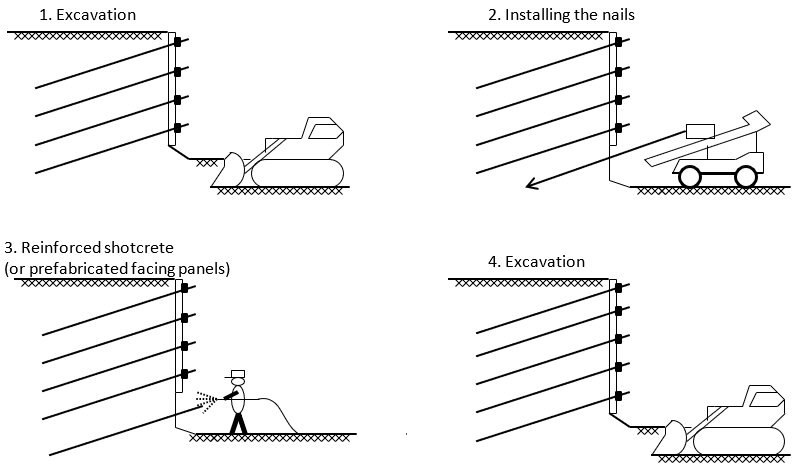
Figure 1: Typical soil nail wall construction sequence
Temporary Conditions:
Temporary conditions are typically imposed during intermediate construction phases. Following a partial excavation, a row of soil nails is installed, accompanied by the construction of soil nail heads and shotcrete facing.
During these stages, the designers should assess the slope stability safety factor, ensuring its sufficiency before proceeding with further excavation.
The prescribed minimum safety factor for temporary construction stages of soil nail walls is 1.3, a criterion integrated within SnailPlus.
Implementing the guidelines of the FHWA partial factors designed for temporary soil nail wall phases (spanning up to 48 hours), SnailPlus introduces an analytical approach that goes beyond just the basic functions of software.
The following figure presents the soil nail wall analysis results for a temporary stage including the critical slope surface, the slope stability FS, the soil nail wall reactions and structural/geotechnical check ratios, as well as the partial factors that are being applied due to the selected stage conditions:
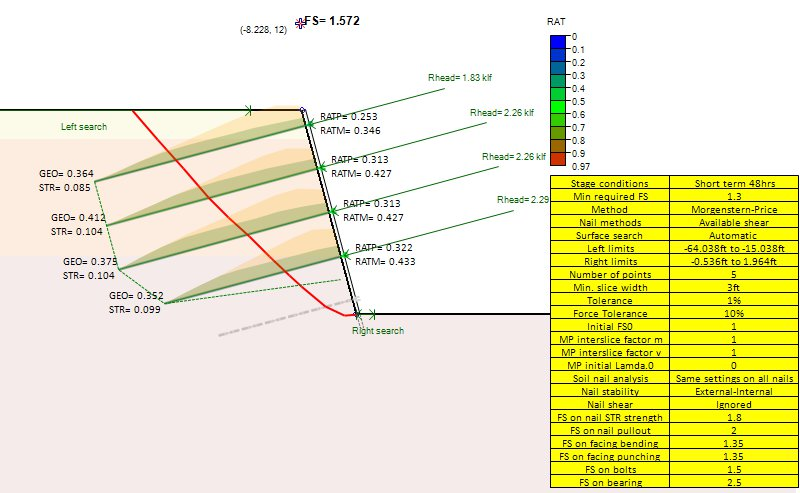
Figure 2: Temporary Conditions – SnailPlus Factors & Analysis Results
Permanent Conditions
Permanent conditions find their application during the ultimate phase of construction, characterized by the completion of soil nail wall excavation and the installation of the concluding row of soil nails. Evidently, this stage designates the adoption of a permanent facing for the structure, requiring an evaluation of the soil nail wall system under the lens of long-term considerations.
In this context, the prescribed minimum slope stability safety factor is increased to 1.5. The following figure presents the SnailPlus analysis results and analysis assumptions for the permanent stage.
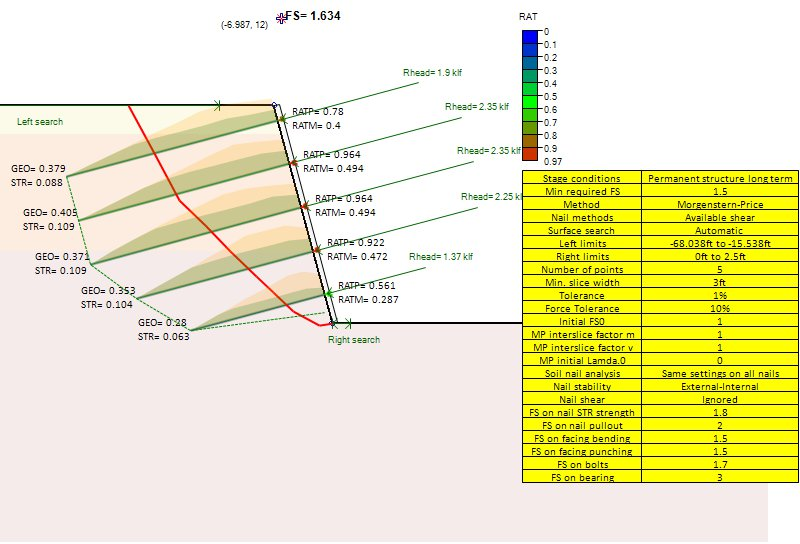
Figure 3: Permanent Conditions – SnailPlus Factors & Analysis Results
Extreme Event Conditions
Much like various other geotechnical engineering endeavors, the evaluation of soil nail walls requires the consideration of potential extreme events, which could include seismic activities, flooding, and similar scenarios.
Within these extreme circumstances, the structure becomes subject to additional forces that require detailed evaluation by engineers to guarantee the maintenance of requisite slope stability.
Such assessments are conventionally conducted in an additional construction stage subsequent to the completion of the permanent structure, recognizing the potential occurrence of such incidents in the future.
In alignment with this perspective, code provisions define a minimum safety factor of 1.1. Furthermore, it is recommended to reduce the partial factors associated with permanent actions and design capacity limitations.
The following figure presents the SnailPlus analysis results and analysis assumptions for the conditions of an extreme seismic event.
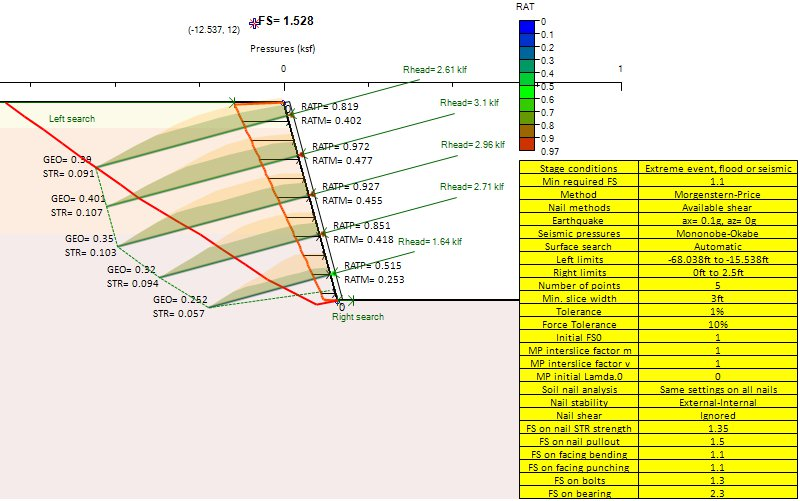
Figure 4: Seismic Conditions – SnailPlus Factors & Analysis Results
C. CONCLUSION
As we have explored in this article, the necessity to evaluate every stage of soil nail wall construction cannot be understated. From temporary and permanent conditions to extreme events, each phase holds its significance in ensuring the stability and safety of the structure.
Herein lies the practical value of SnailPlus – a software that streamlines this complexity.
With its incorporation of FHWA guidelines and its interactive interface, SnailPlus becomes an indispensable tool for engineers.
It enables the seamless consideration of different construction conditions in the same model, facilitating comprehensive analysis and optimization of any soil nail wall project.
Try now our software and witness firsthand how to tackle any slope stability analysis challenge and maximize the productivity and effectiveness of your engineering practice.
A major SnailPlus upgrade is coming up!
We are proud to announce that a major upgrade in our SnailPlus - Soil Nail Wall software is coming soon! The new software version will include a lot of improvements and a cool new, optional module - Export Sketches to DXF. You will be able to enjoy the design of soil nail walls in our superior interactive interface, export detailed reports, and with the new module you will be able to export your soil nail wall model sketches to DXF with a click. Stay Tuned!
Book A free web presentation: