

What soil properties should I define in DeepEX?
In DeepEX software, precision in analyzing excavation projects starts with the meticulous definition of soil properties based on a thorough geotechnical report. The software provides intuitive tools to facilitate this process, allowing users to estimate soil properties through SPT records and other pertinent test data.
General Soil Properties
For traditional Limit Equilibrium analysis, DeepEX relies on the soil properties defined in the General tab of the soil properties dialog.
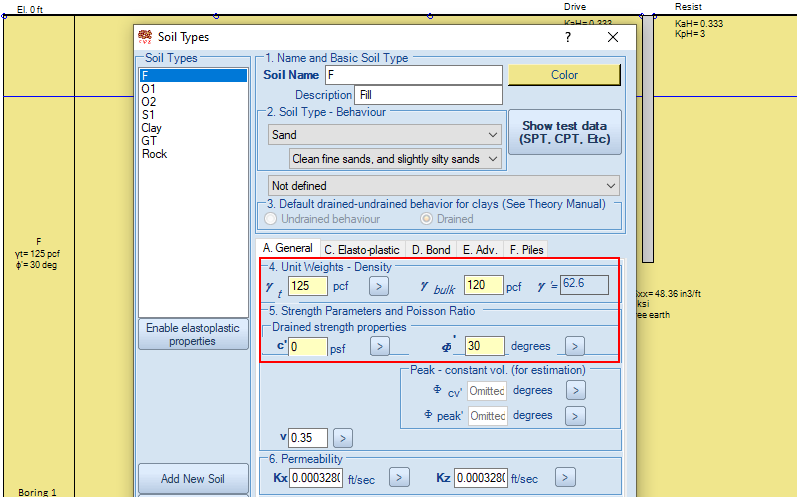
Frictional Soils (Sands, Silts, Rocks and more):
When dealing with frictional soils such as sands, silts, rocks, and more, it is essential to specify unit weights both above and below the water table, along with cohesion and friction angle. Permeability parameters come into play when opting for a full flownet analysis (2D flownet with finite differences).
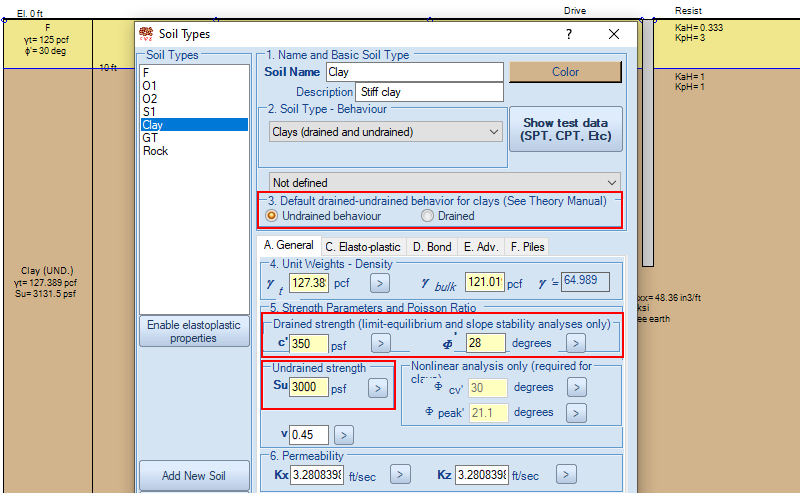
Clays (drained and undrained):
DeepEX introduces the need to define default clay behavior, distinguishing between drained and undrained conditions. Undrained clays, typically found below the water table and fully saturated, utilize the defined undrained shear strength value. In contrast, drained clays, typically above the water table and partially consolidated, employ the defined drained strength and friction angle.
In Non-Linear analysis with soil springs, the defined Su value works as a maximum limit. In fact, the clay strength increases with depth, using the defined constant volume friction angle for normally consolidated conditions ( cv) and the peak friction angle, as well as the over consolidation ratio OCR that can be defined in the Borings dialog for each soil layer.
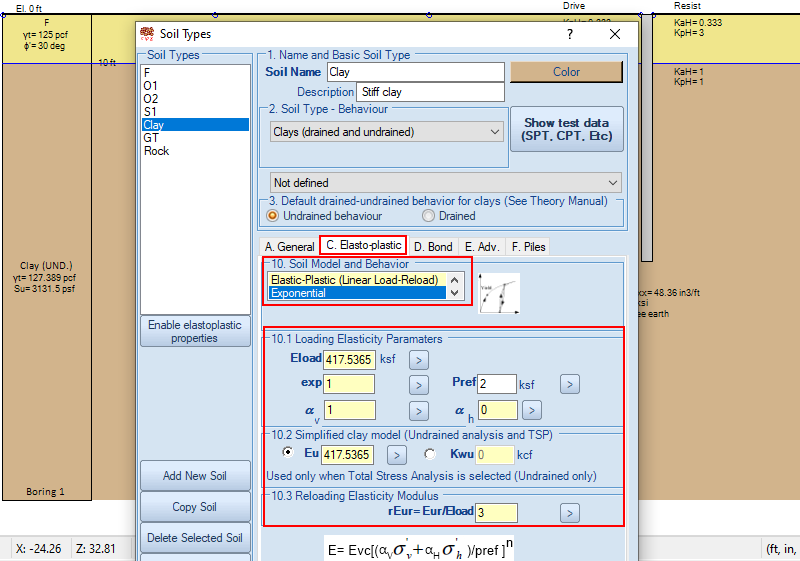
Soil Model – Behavior
In scenarios where Non-Linear analysis with soil springs or Finite Element analysis is selected, the "Elasto-plastic" tab in the soil types dialog becomes instrumental. This allows users to define intricate soil behaviors, such as linear elastic-perfectly plastic, exponential hyperbolic, subgrade-modulus, smallstrain hardening, and more. Parameters related to each selected soil behavior, including modulus of elasticity and exponents, can be specified here.
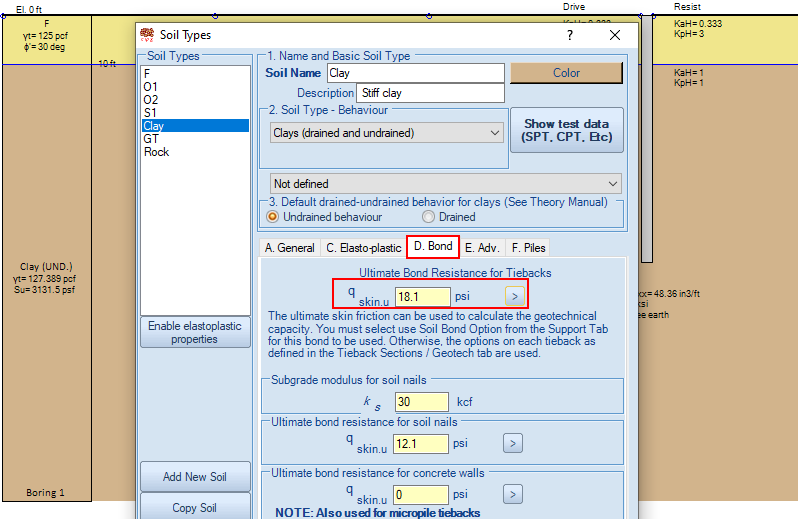
Ultimate Bond Resistance (for tiebacks)
For models involving tiebacks, it is imperative to access each soil type expected to host the grouted part of a ground anchor. In the Bond tab of the soil types dialog, users define the ultimate bond resistance— a critical parameter representing the skin friction between the soil and the anchor grout. This value plays a pivotal role in determining the geotechnical pullout capacity of tiebacks.
Let us show you how to reduce your design time by up to 90%!


