
How can DeepEX calculate the slope stability safety factor in my excavation models?
Updated: May 20
DeepEX offers a comprehensive suite of slope stability analysis methods, enabling engineers to calculate safety factors for both circular and non-circular slope surfaces. This guide provides an overview of the available methods and explains how to apply them within the software.
A. Simplified Bishop Method
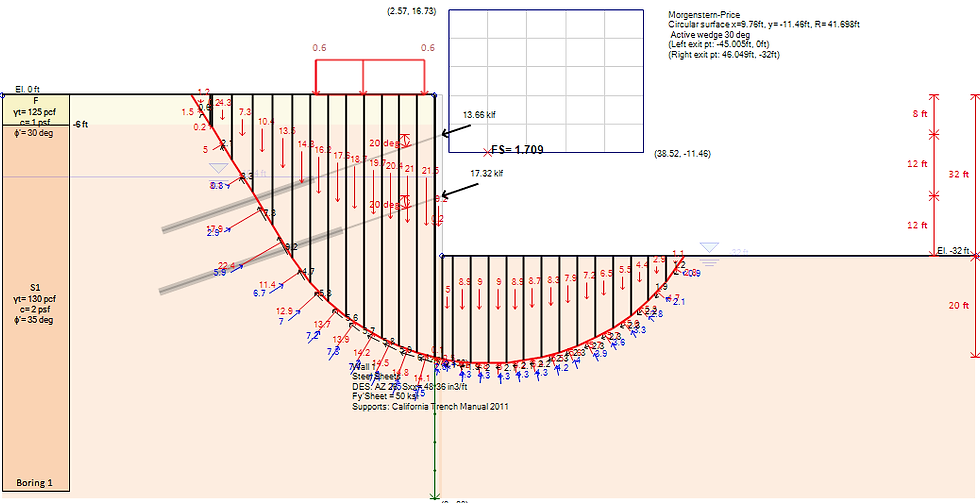
The Simplified Bishop method utilizes the method of slices to discretize the soil mass and determine the Factor of Safety (FS). This method satisfies vertical force equilibrium for each slice and overall moment equilibrium about the center of the circular trial surface. Horizontal forces and interslice shear forces are not considered. Application: Circular failure surfaces. Support Effects: Calculated as additional moment resistance about the center of rotation. Supports within the failure circle are ignored.
B. Generalized Limit Equilibrium Method (GLE – Morgenstern-Price)
The GLE method extends Spencer’s method by adopting a function to assign the interslice force angle on the right-hand side of each slice, allowing for the analysis of various slope shapes. Application: Circular and non-circular surfaces. Support Effects: Considered in both vertical and horizontal directions for overall equilibrium. Exact support force points are included.
C. Spencer Method
Similar to the GLE method, the Spencer method assumes a single interslice angle for all slices. Application: Circular and non-circular surfaces. Support Effects: Considered in the same manner as in the GLE method.
D. Ordinary Swedish Method
The ordinary Swedish method typically involves simple assumptions about slice forces and is often used for quick assessments.
Applying Slope Stability Methods in DeepEX
Selecting an Analysis Method
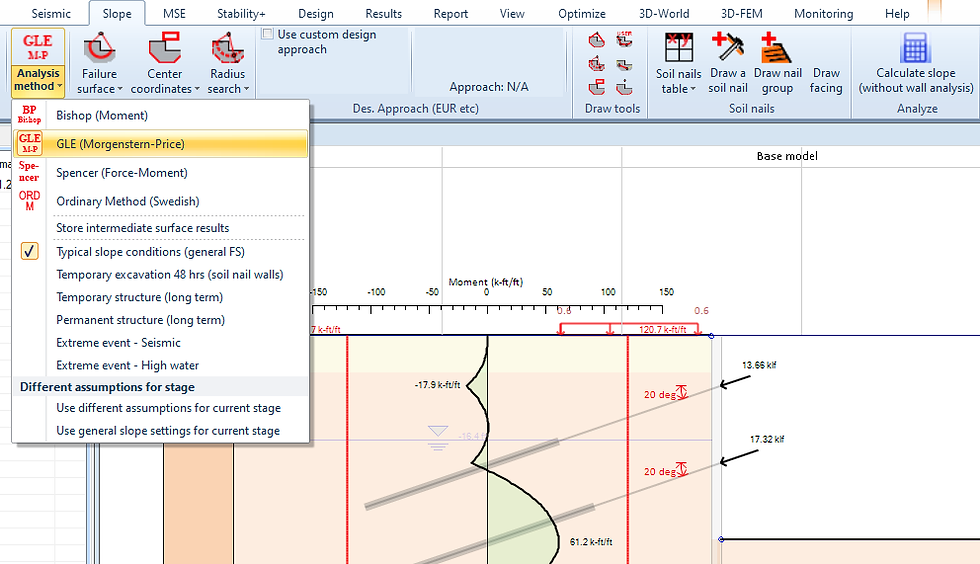
To select a slope stability analysis method, navigate to the Slope tab in DeepEX. Choose the desired method from the available options.
Defining the Critical Slope Surface Search Method
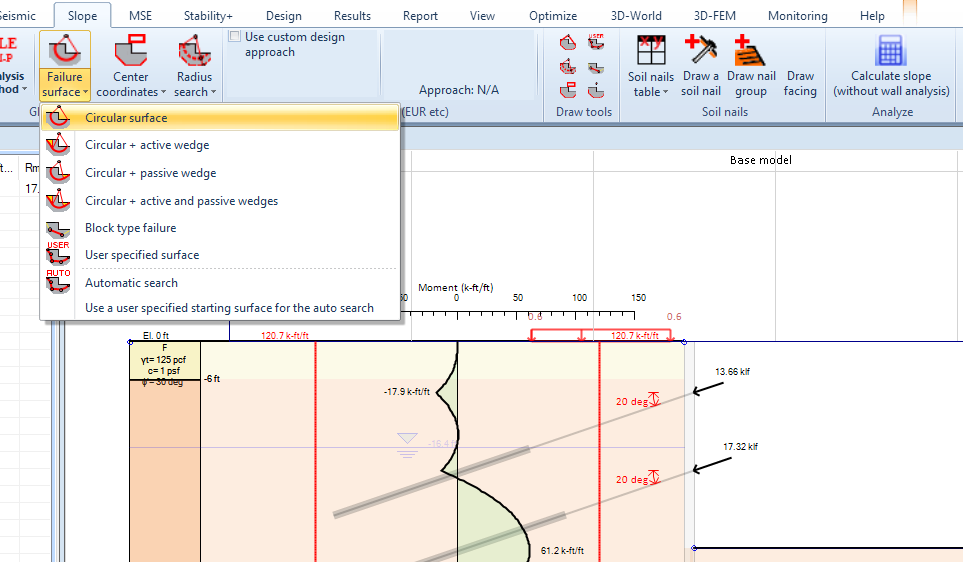
The user can select from a series of implemented methods in the Slope tab of DeepEX and then use the corresponding draw tools to edit the search limits depending on the selected method.
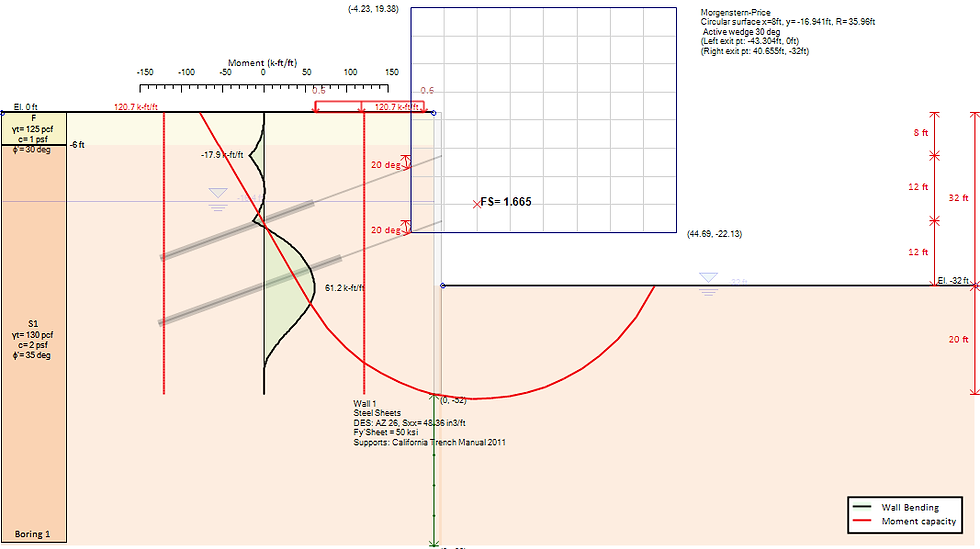
- Circular Failure Surfaces with our without wedges
For circular surfaces we can define either a single slope center or a rectangle of centers that allows the program to examine multiple circular slope surfaces, as well as the radii search limits. The program will examine all center points and radii combinations and return the most critical slope surface (the one producing the minimum slope stability safety factor).
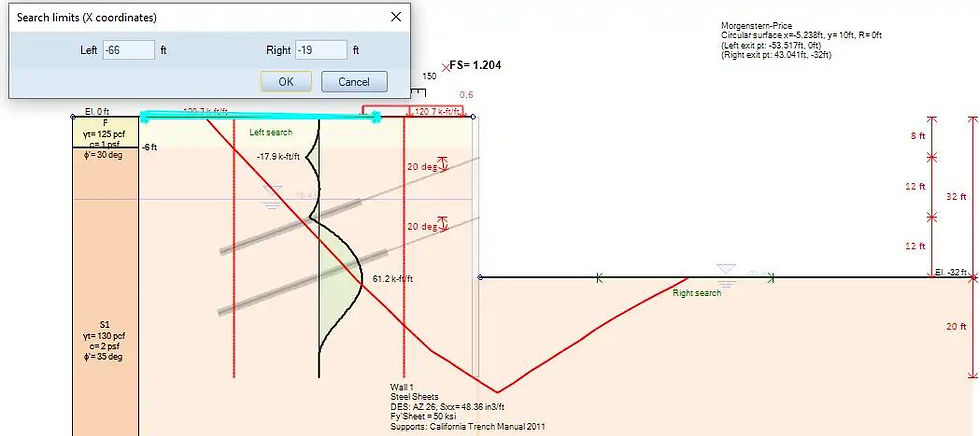
- Non Circular Surfaces – Automatic Search Approach
The automatic search method utilizes an implemented random genetic algorithm to check several non circular surfaces that pass through user-defined start and end limits.
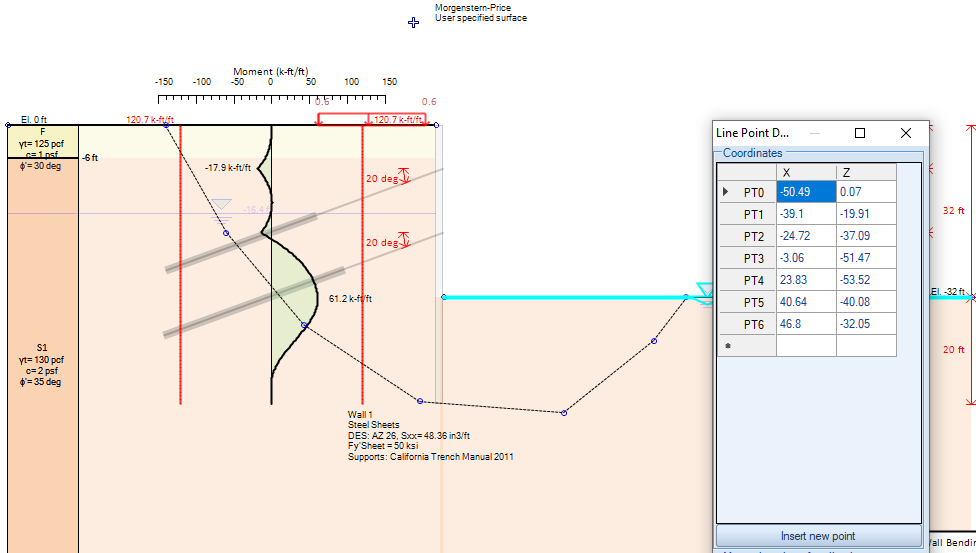
- User-Specified Failure Surface
In DeepEX we can specify any slope surface manually, just by clicking on points on the model area. The software will use the specified surface and calculate the corresponding slope stability analysis safety factor.
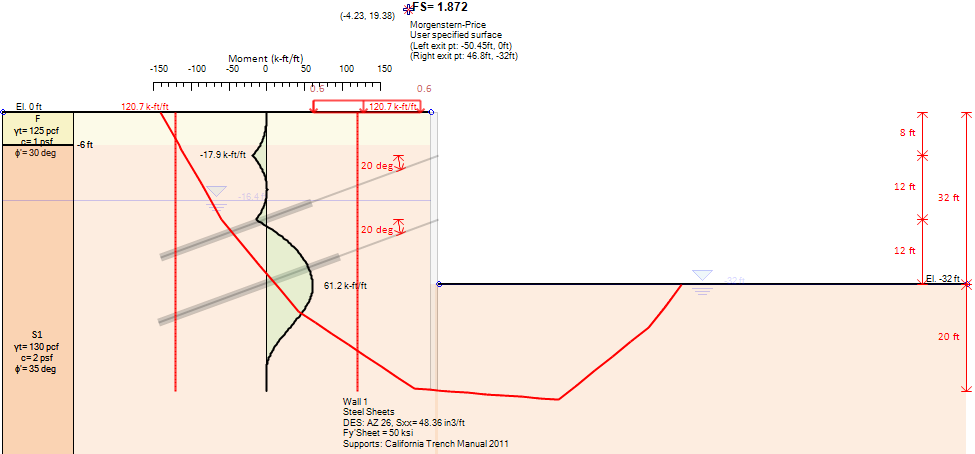
By following these steps, you can effectively utilize DeepEX for slope stability analysis, ensuring robust and reliable design outcomes.
Let us show you how to reduce your design time by up to 90%!


