
Designing Urban Excavations in Alluvial Soils
Updated: Apr 3
A Top-Down Approach with Eurocode-Compliant Analysis with DeepEX
Introduction
Designing deep excavations in urban environments requires more than simply checking a factor of safety.
In cities characterized by alluvial deposits and high groundwater levels, engineers are often faced with a combination of challenges: variable soil stratigraphy, groundwater pressures, strict deformation limits, and the need to comply with Eurocode-based design frameworks. In such conditions, the governing design case is not always the final stage — it often emerges during intermediate phases of construction.
Such soil conditions are commonly encountered in Northern Italy, but also in many European urban environments, including parts of France, Germany, and the Netherlands, where layered alluvial deposits and shallow groundwater govern excavation design.
This article presents a representative case study of a top-down excavation system in alluvial soils, analyzed using DeepEX. The study combines Limit Equilibrium Method (LEM) analysis with Eurocode 7 load combinations (DA1 and DA2), Finite Element Method (FEM) analysis for soil–structure interaction, and structural verification based on Eurocode 2 and Eurocode 3 — all within a unified modeling environment.
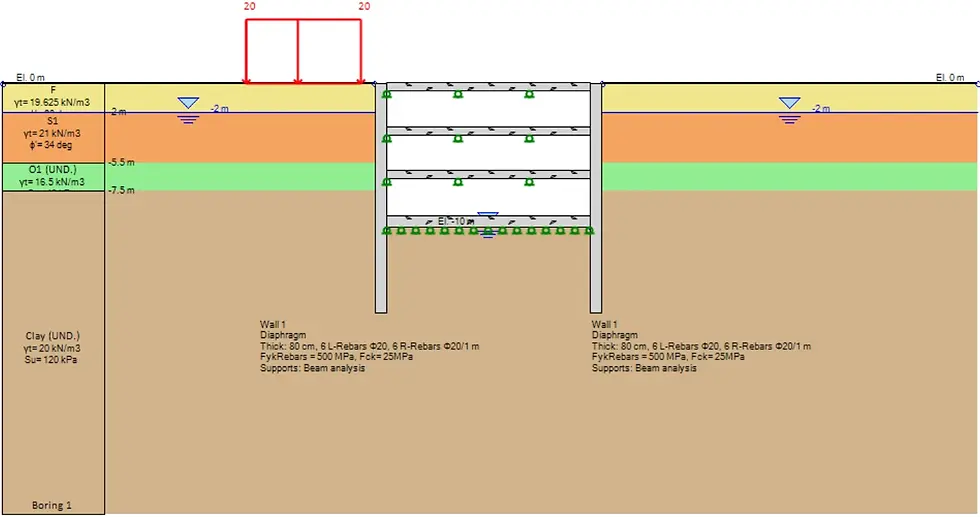
Figure 1: Top down excavation model in alluvial soils – DeepEX software
Project Description and Soil Conditions
The examined model represents a 10 m deep excavation, typical for underground structures such as basements or metro stations in dense urban environments.
The soil profile reflects common alluvial conditions frequently encountered in European cities with fluvial deposits. In particular, this type of stratigraphy is highly representative of projects in areas such as Milan and the Po Valley, where alternating granular and cohesive layers, combined with shallow groundwater, govern excavation behavior.
A shallow fill layer is followed by medium dense sand, transitioning into soft clay and finally into a stiffer clay deposit at depth. The groundwater table is located at approximately -2 m, introducing simplified flow water pressures that significantly influence both stability and deformation behavior.
Such stratigraphy is particularly challenging because it combines relatively stiff granular response near the surface with more deformable cohesive behavior at depth. As a result, both strength and stiffness variations must be carefully considered during analysis.
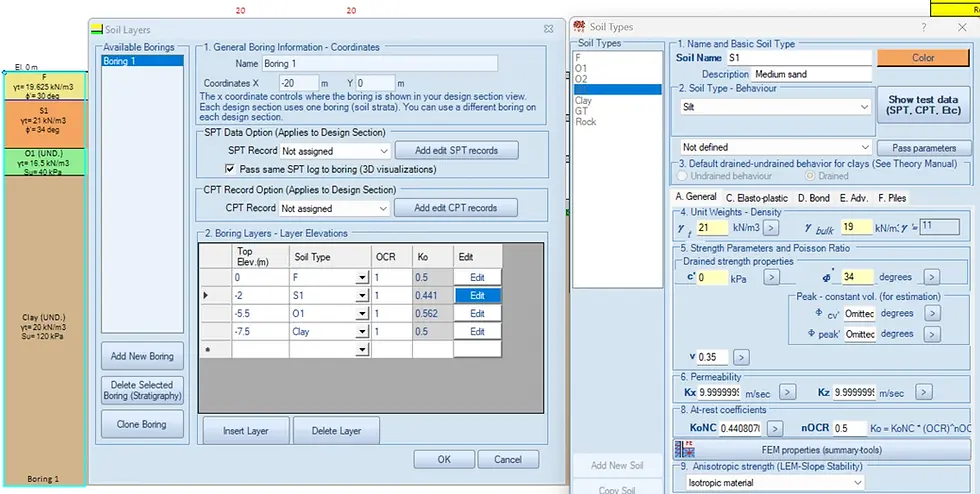
Figure 2: Soil properties and stratigraphy in DeepEX
Structural System – Top-Down Construction
A top-down construction approach is adopted, which is widely used in dense urban environments where deformation control and limited surface disruption are critical.
In this system, diaphragm walls are constructed first, followed by excavation in stages. As the excavation progresses, structural slabs are installed progressively, acting both as permanent structural elements and as temporary supports during construction. In this case, the system includes a top slab, two intermediate slabs, and a base slab.
What makes top-down construction particularly interesting from an engineering perspective is that the structural system evolves with each stage. The slabs actively influence the redistribution of forces and the deformation of the retaining walls, meaning that the response of the system is highly dependent on the construction sequence.
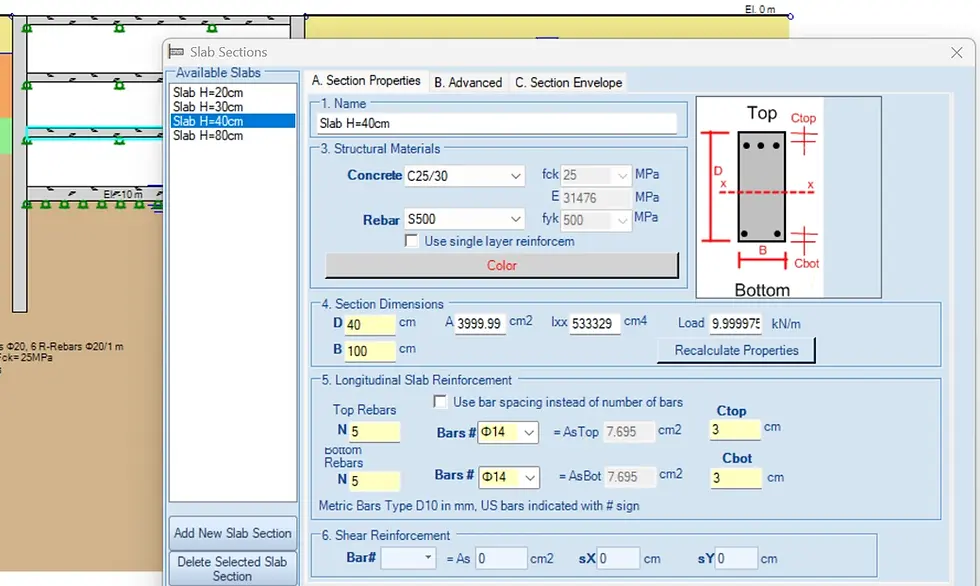
Figure 3: Concrete slab section properties – DeepEX software
Do you wish to analyze and design fully Eurocode-compliant deep excavations in one place? Meet our experts, find out how to save time and effort with our software!
Analysis Methodology
To capture both design requirements and actual system behavior, the excavation is analyzed using complementary approaches.
The Limit Equilibrium Method (LEM) is used as the primary design tool, following Eurocode 7 Design Approaches DA1 and DA2. The analysis incorporates Blum’s method for wall structural response, German EAB apparent earth pressure diagrams, and simplified groundwater flow conditions. This provides the necessary framework for calculating wall moments, support reactions, and stability checks in accordance with standard European practice.
To better understand the behavior of the system, a 2D FEM analysis is also performed. A fine mesh is adopted, and wall friction is taken as 66% of the soil friction angle. Unlike LEM, which relies on predefined pressure distributions, FEM allows stresses and deformations to develop naturally as excavation progresses. This enables detailed evaluation of wall deflections, soil settlements, and the interaction between structural elements and the surrounding ground.
Structural verification is carried out within the same model using Eurocode 2 for reinforced concrete elements and Eurocode 3 for steel components. This unified approach ensures that the structural checks are fully consistent with the geotechnical analysis and the applied load combinations.

Figure 4: DeepEX analysis summary table – Critical results in DeepEX
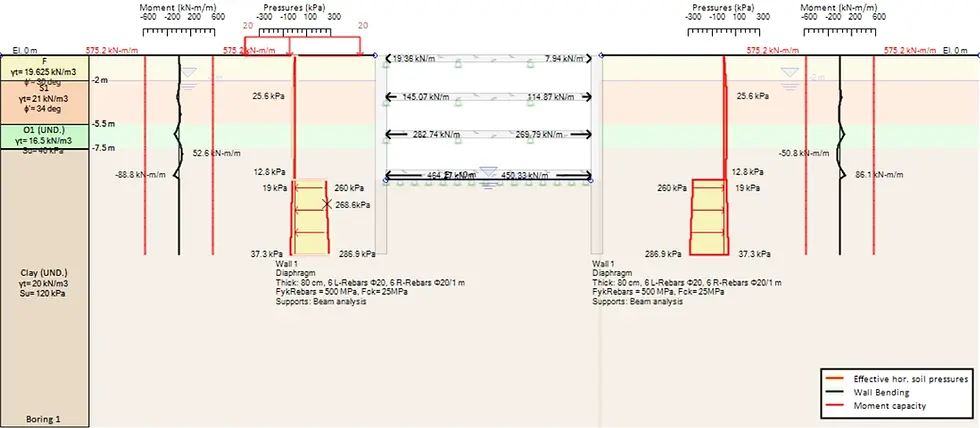
Figure 5: Wall moments, soil pressures, support reactions – EC7 – DA1-Combination 1
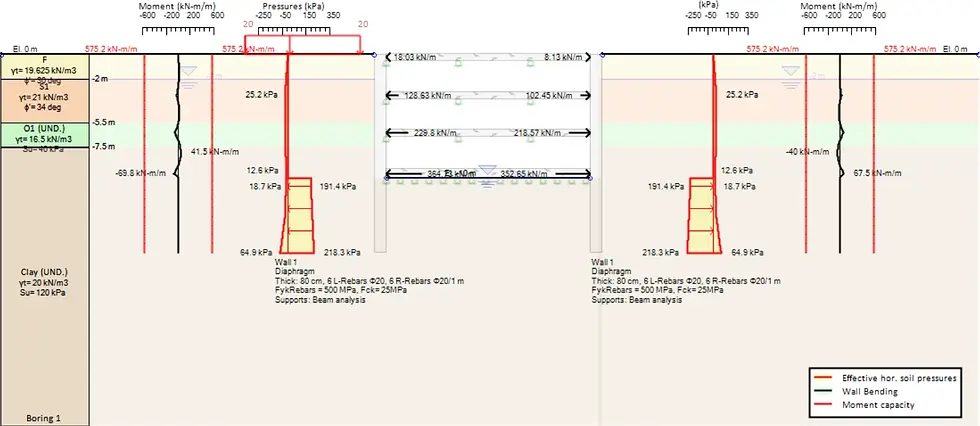
Figure 6: Wall moments, soil pressures, support reactions – EC7 – DA1-Combination 2
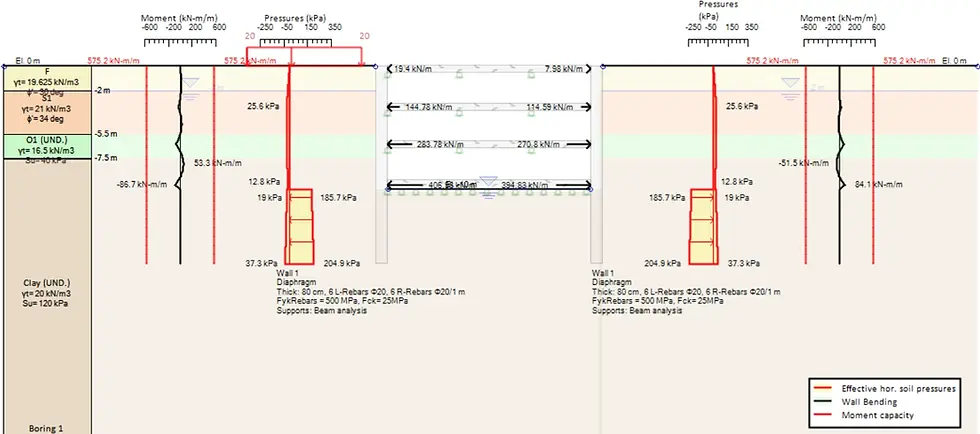
Figure 7: Wall moments, soil pressures, support reactions – EC7 – DA2
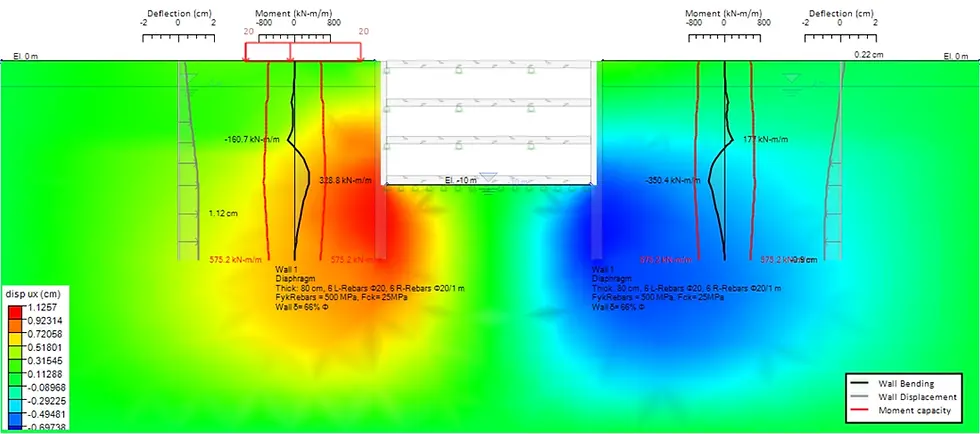
Figure 8: FEM analysis in DeepEX – Displacement shadings, wall moments and displacements
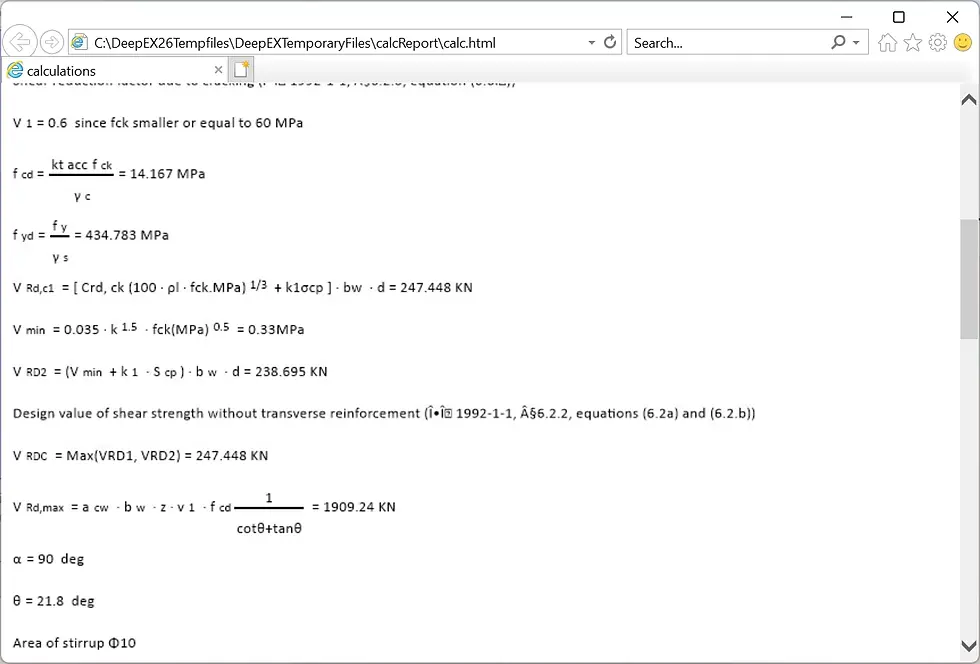
Figure 9: Sample wall structural checks in DeepEX – Eurocode 2
Key Observations
One of the most important findings from the analysis is that construction stages govern the design. The most critical wall moments and displacements do not necessarily occur at the final stage but often appear during intermediate excavation phases, before the full support system is activated. This highlights the importance of accurately modeling staged construction rather than relying solely on final conditions.
The influence of soil stratigraphy is also evident. As excavation progresses from medium dense sand into soft clay, an increase in deformation and a redistribution of internal forces can be observed. This transition zone plays a key role in the overall response of the system and must be captured accurately.
Groundwater conditions further amplify these effects. With the water table located close to the excavation level, water pressures significantly increase lateral loads and reduce effective stresses in the soil. Even when simplified flow assumptions are used, water remains a dominant factor in both stability and deformation behavior.
The comparison between LEM and FEM highlights their complementary nature. LEM provides reliable, code-compliant design forces, while FEM offers deeper insight into system behavior, particularly in terms of deformation and stress redistribution. Using both approaches together results in a more robust and informed design process.
Practical Implications for Engineers
From a practical standpoint, this case study reinforces several important principles.
Construction methodology should always be treated as a design parameter, not just a construction decision. The sequence of excavation and installation of supports directly affects internal forces and displacements. Intermediate slabs, when properly positioned and timed, can significantly reduce wall moments and improve system performance.
At the same time, groundwater conditions must be incorporated early in the analysis, as they can govern both stability and serviceability. Finally, combining LEM and FEM within a unified workflow allows engineers to achieve both code compliance and a realistic understanding of system behavior, reducing uncertainty and improving confidence in the design.
Conclusion
Deep excavations in alluvial soils present a complex interaction between soil variability, groundwater conditions, structural systems, and construction staging. This type of analysis is particularly relevant for urban projects in regions with alluvial deposits and high groundwater levels, such as Northern Italy, where construction staging and deformation control play a critical role in design.
This study demonstrates that a top-down excavation system, analyzed using both LEM and FEM approaches and verified with Eurocode standards, can be effectively designed within a single modeling environment. More importantly, it shows that reliable design depends not only on satisfying safety criteria, but on understanding how the system behaves throughout the construction process.
By integrating geotechnical analysis, structural verification, and staged simulation, engineers can move beyond simplified assumptions and toward a more comprehensive, performance-based design approach.
Trusted By
Still not persuaded? Let us show you how to reduce your design time by up to 90%!


